7th Sunday in Ordinary Time (C) – February 23, 2025
St. Paul – Lyons, KS
1 Samuel 26:2, 7-9, 12-13, 22-23; Psalm 103; 1 Corinthians 15:45-49; Luke 6:27-38
The Natural and Unnatural Reaction: Vengeance vs. Forgiveness
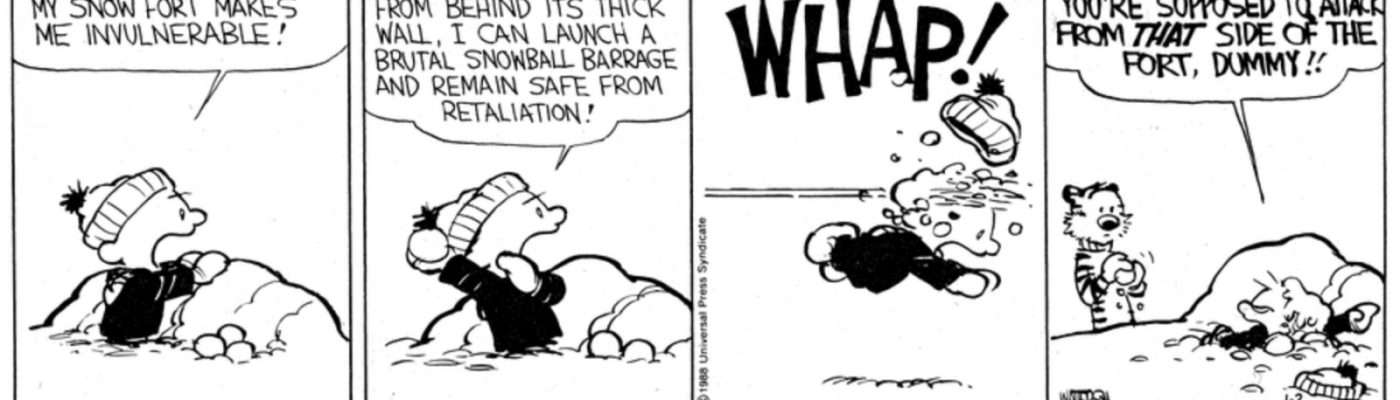
Like all of you, I’ve been enjoying the weather Kansas has thrown us these past few weeks. 70º shift in less than a week—only in Kansas! But all the snow reminded me of being a kid and having a good ol’ snowball fight. And as everyone knows, in a snowball fight there are some common rules—common, but unspoken. Rules like: don’t aim for the face; don’t make snowballs out of slush that really tightly packed (because, you know, that’s just a rock); oh yeah, and don’t put rocks in the middle of your snowball. Simple rules! Everyone knows ‘em!
When I was a kid (I was probably about ten)—there was one time when I was having a snowball fight with my brother (who would have been about fourteen at the time, and that’s about the time you realize there is a big difference between 10 and 14), and he chucks this tightly-packed slush-ball with a rock in the middle of it—hits me right in the face! And I cannot even attempt to recreate the blood-curdling, murderous scream that came from the depths of my being—but I went after him ready for blood. Pure rage coursing through my veins.
Now, hearing this, I doubt any of you are shocked. Most of you are probably like, “Yeah, I get that.” And why is that? Because it’s a natural reaction. It’s natural. None of you are like, “Oh, that seems like a strange response,” no. Very natural. And as adults, we have the same—same but more violent or more refined—versions of throwing “slush balls” at each other. And even though we sometimes do scream bloody murder or getting into physical fights, more often than not we respond to these “slush balls” by attacking people’s character with gossip or slander, we punish them through resentment and shunning them, and many other “refined” methods. And whether it’s your workplace or your family or other relationships—you know that you’ve hurled some “hard-packed slush-balls,” and you’ve had some hurled at you. And it hurts! And our natural—our natural reaction is to get even; to do to them what they were going to do or did to us.
This is the exact kind of what’s going on in our first reading: David is on the run from Saul—Saul who wants to kill him. And Saul has tried several times, albeit unsuccessfully. And so David is running for his life, has literally escaped death at this guy’s hands. And in this part of the story today, David and his companion Abishai sneak into Saul’s tent, and Abishai goes, “Look at this! Saul, completely helpless. [Here’s our chance!] Let me nail him to the ground with one thrust of the spear.” “Let me nail him to the ground.” Mmm! Great stuff! But look: here is this unjust situation (Saul hunting David down to murder him) and here is the natural reaction (do to him what he’s trying to do to you). This is the natural reaction.
But there is a very unnatural reaction—when we are hurt, when someone hurts us, flings their “hard-pack slush balls” at us, when we are left hurt and wounded—there is an unnatural reaction. And that is to forgive. Very unnatural. There is no “natural” urge to forgive someone. As disciples of Jesus Christ, it comes “second nature” to us. And the question is why? Why would Jesus teach us, command us to do something so unnatural? Why would you do something so unnatural? And it doesn’t make sense if you don’t follow Christ. But if you do, it makes all the sense in the world.
And for us—us, here in the midst of this series called “Renewing…”—us, who want to experience the healing power of Jesus Christ in our lives—for us, forgiving is a crucial, I would say necessary. part of experiencing this healing power. But why?
Jesus Forgives
Well first, can you think of a moment in Jesus’ life when he was being hurt? When other people were hurling their “slush-balls” at him, and it hurt him, and he chose to forgive? When he did this very unnatural thing? At his crucifixion, exactly. And there on the cross Jesus said, “Father, forgive them; for they know not what they do” (Luke 23:33-34).
There, Jesus—in the midst of betrayal, having experienced a sham of a trial, false charges, suffering violence and torture (violence that makes my story pretty tame), stripped naked, humiliated publicly, nailed to a cross, being murdered, abandoned by his friends—and forgiveness is his natural reaction.
And in this moment, Jesus is just walking his talk. Today’s Gospel is one of many examples of Jesus commanding—commanding, not suggesting—commanding his disciples to forgive. Jesus says, “Stop judging and you will not be judged. Stop condemning and you will not be condemned. Forgive and you will be forgiven.…For the measure with which you measure will in return be measured out to you.…Be merciful, just as your heavenly Father is merciful.” Forgive—it’s not a suggestion. Grammar nerd moment: the word “forgive” there is in the present active imperative. In other words, it is a command, an imperative. But also, it means to do it regularly or continuously. Forgive, and keep forgiving, and forgive again.
What Is “Forgiveness”?
Ok, but what does Jesus mean when he commands us to “forgive”? Because what most people assume Jesus means is, “Pretend everything is ok and let them keep walking all over you, let them keep hurting you.” But that’s not what Jesus is commanding. There is a difference between Jesus’ command to forgive and trying to reconcile, to fix a relationship with someone. The way I think about it is that while reconciliation is a two-way street—both people have to want to work things out—forgiveness is a one-way street—you can forgive even if they aren’t sorry, even if they aren’t going to change. Doesn’t mean you pretend everything is ok, or you keep putting yourself in a position for them to walk all over you. It just mean that forgiveness is on you. That’s why Jesus can command it.
The Greek word for forgiveness is aphiemi. And this word, in its most basic meaning, means “to release, to let go, to drop.” This is very interesting. In English we have different words. If I’m holding a rock, and I do *this*, we say, “You release it.” If I have a backpack and take it off, I “let it go,” I “drop it.” But if our relationship is broken, or if I have been harmed by you, but then I choose to do something to overlook that wrong in some way, we have a different word: forgive. Not in the language of the Bible; it’s the same word. To release (the rock), to let go or drop (the backpack), and to do that thing where you overlook the problem—all of that is aphiemi.
The metaphor of language Jesus is using, and the language we use, is money—a debt. In life, in broken relationships, and sin, and hurt, betrayal—to forgive means to release someone’s debt to you, to “let go” of what they owe you. When someone wrongs you, or when your brother launches a hard-packed slush-ball at you—all of a sudden, they are “in your debt.” And in a situation of hurt, betrayal, violence, etc., there are two ways out: one, the person who wronged you can “pay” (and that’s what we call justice); or you can “pay” (in other words, you absorb the debt, you pay)—and this is forgiveness.
Now, just notice how you feel. Notice how off-putting it is to even suggest this. “Why would you do that?” But the reason why Jesus calls his disciples, calls us to that is because of the meaning of that moment on the Cross. On the Cross, Jesus enters into solidarity with the condition of human sin, and violence, and malevolence—in its most extreme case. And in this moment, Jesus can forgive because of one fact: his absolute and complete faith, complete trust in the Father, that the Father will will make it right, that the Father can “cover the cost.” And He does. He raises Jesus up. Even in death, there is Resurrection. The purely human way of looking at things says, “If you don’t get even now, you never will.” But Jesus says, “The Father will make it right.” And the resurrection is the promise of that.
Forgiveness As the Key to Healing
But what about us? All of us—all of us have a long list (I’m sure) of ways that we have been hurt, wounds that we carry. Some of them we are very conscious of, some we aren’t. Some are from early in life, some very recent. Some are from others, some are self-inflicted. Maybe it’s a betrayal that still stings, a harsh word you can’t shake, a regret that weighs you down. I’ve heard some people talk about resentments and grudges that are decades old. But like a backpack full of rocks, each instance just adds another rock to the backpack—each one a grudge, a hurt, a moment you can’t let go of. And that weight presses on you, day after day.
But what if you could set it down? Not because the person who hurt you deserves it, but because you deserve to be free? That’s what forgiveness offers. Unforgiveness—it’s a “spiritual poison.” One priest would always say, “Resentment is a poison you drink yourself.” Unforgiveness is like picking the scab off of a wound—as long as we keep picking at it, it will never properly heal. All of these instances of unforgiveness—all they do is fester and block God’s grace, they keep us tied to our pain. But Jesus—he shows us a different way, a way to healing: forgive.
Forgiveness—to forgive is a choice, a decision to let go of the debt we think others owe us and to hand it to Jesus. To take it to him, unite it with him on the cross. Surrender it to the Father. Pray, “Lord, help me see this person as You see them—broken, wounded, in need of mercy.” That’s what Jesus means when He says, “Bless those who curse you.” It’s not pretending the hurt didn’t happen—it’s trusting God to handle it.
So today—today I want you to take one step. Maybe a small one, but a real one. I want you to think of one person or situation where you’re struggling to forgive. But do this with the Lord. So just take a moment and close your eyes. Take a few deep breaths.
First, ask the Holy Spirit to come and to show you who you need to forgive. This could be family member, a friend, an abuser, God, even yourself. And allow the Spirit to help you picture this person in front of you—and pay attention to what you feel.
Next, just take a moment to make an “account” of the “debt” they owe you: what did they take from you, how did they hurt you? (And it’s okay to feel angry). And then imagine yourself telling them what they did to hurt you and how it has affected you.
Now, ask Jesus to forgive the person.
And now you—you forgive the person. Just pray this: “Lord, I forgive [name] for [specific hurt]. I release them to Your mercy and ask You to heal my heart.”
Bring this to Confession sometime. Take this to Jesus during your time in Adoration. Continue to forgive—remember, it’s a a present active imperative: do it regularly, continuously; forgive, and keep forgiving, and forgive again. Forgiveness isn’t instant—it’s a process, like snow melting bit by bit. But it starts with one act of obedience to Christ’s command.
Here in this Eucharist, here where the sacrifice of calvary is represented, made present to us on this altar—we are at the cross, uniting ourselves with Jesus Christ on the cross, offering our very lives to the Father—here, lay your burdens down. Forgive. Forgive and you will be forgiven. And you will experience a healing only he can give.
 The Beggar