8th Sunday in Ordinary Time (C) – March 2, 2025
St. Paul – Lyons, KS
Sirach 27:4-7; Psalm 92:2-3, 13-16; 1 Corinthians 15:54-58; Luke 6:39-45
“In the middle of the basilica…”
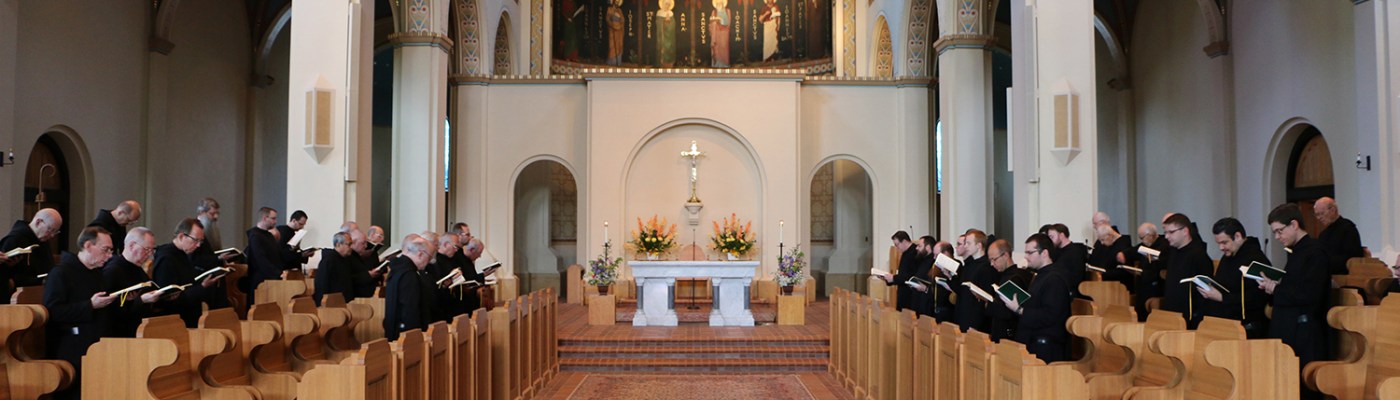
I’ve shared before how, for college, I attended college seminary at Conception Seminary College up in northwest Missouri, ‘bout an hour north of Kansas City. It’s attached to an old Benedictine Monastery, and there are something like seventy-five monks there. But at the center of the campus is this huge, beautiful basilica. Just gorgeous. And the way it’s is set up inside is the altar is here, and then there is an area where the monks sit, facing each other on either side of the aisle. And then the pews for everyone else begin. And it is just very solemn, very reverent.
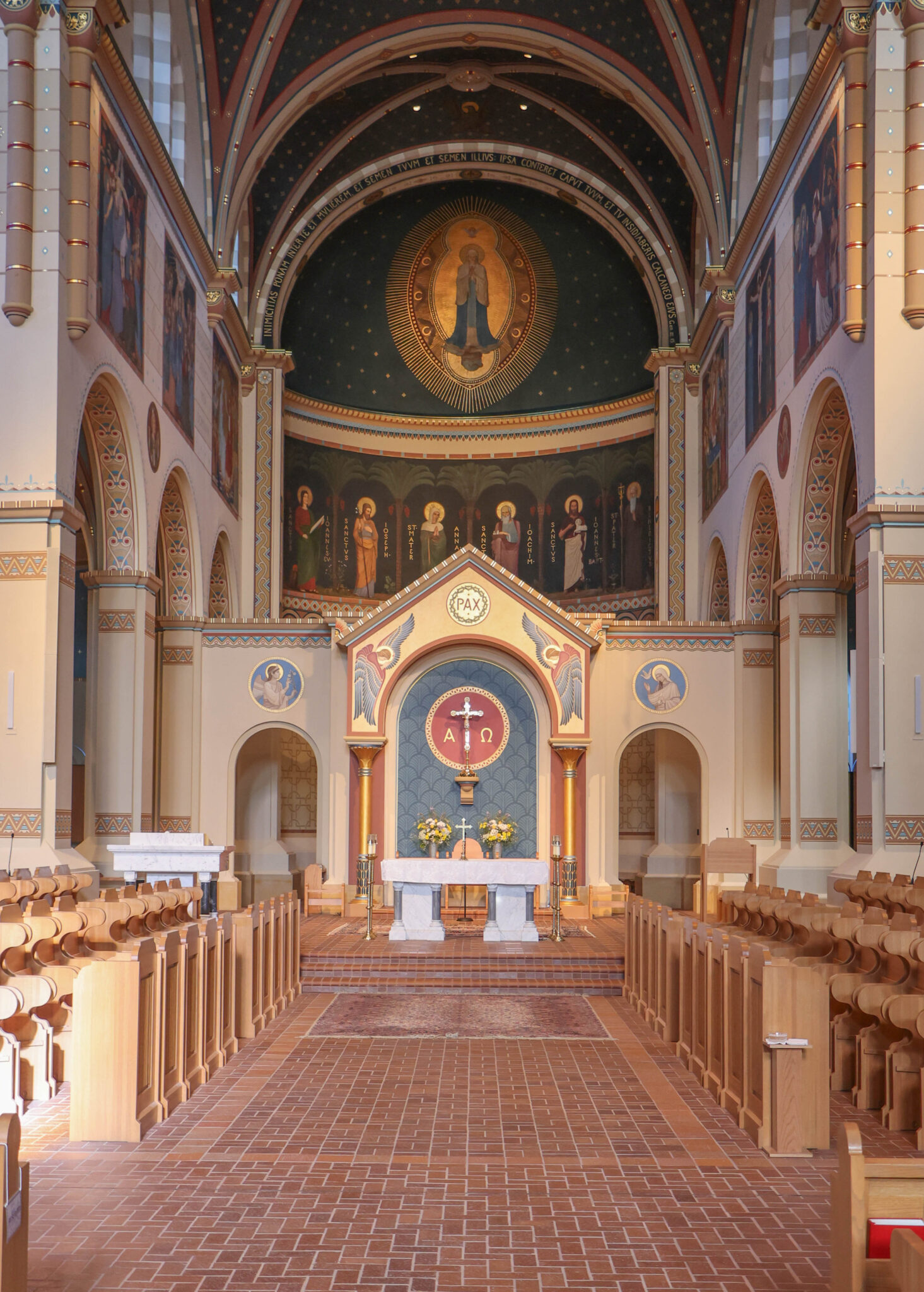
Now, second thing you need to know—which most of you do—my uncle is the Bishop over in the diocese of Dodge City (so just across the border, just over in Barton County). And one day he comes up to visit his seminarians there at the seminary. And since he’s a bishop, the monks have him celebrate the Mass and preach. …and it’s probably the last time they’ll let him do that. Because to this day—to this day he preached a homily that has not been forgotten there.
After he reads the Gospel—which was the Gospel reading we had today—after he reads the Gospel, he goes over to the side of the church and brings over a big potted plant and sets it in between the monks’ seats. Then, he puts on some gardening gloves, and pulls out some pruning shears. And this guy!—this guy starts cutting leaves off of this big plant. And he starts saying, “You know, many of us struggle with sin in our lives. We all do! And we try to get rid of it. Like the leaves on this plant, we start clipping them off. But after a little while, what’s going to happen? They’ll come back. Exactly! Over and over and over again, they just keep coming back. And we get frustrated and upset, discouraged even! We can’t seem to get rid of our sins. Like weeds, they just keep growing back over and over.” And then he paused, and looked at the seminarians and said. “Gentlemen, what do we need to do if we want to get rid of weeds?” And one brave little seminarian said, “Pull up the roots?” And Bishop John smiled. And all the seminarians looked at him like, “No way.” And Bishop John looked over at the abbot, and the abbot had this look of, “He won’t.” And at that moment Bishop John, in the middle of the basilica, in the middle of Mass—pulls the entire plant out of the pot, dirt going everywhere, and he just starts attacking the roots of this plant with the pruning shears. And people don’t even know what to do! We’re just like, “What is happening?” And when he’s done, he just calmly asks, “And so gentlemen, what do we need to do if we want to get rid of sin?” At which point, people were too scared to say anything. And so Bishop John said, “Yes, we need to get to the roots.” And then he sat down like nothing had happened. Like a boss.
By It’s Fruit You Will Know It
This image that Jesus uses in the Gospel of the tree, and how you know what kind of a tree it is by the fruit it bears—this image is very important for us for where we are in “Renewing…”, this series on experiencing the healing power of God in our lives. Why? Well, because we’ve talked about how this healing is not God “fixing” us. We’ve talked about how the wound that needs healed is much deeper than we think, something at the level of our identity. And last week about how we can gum up the whole process if we hold on to unforgiveness—we need to forgive others. But today, we start digging into what we—what I, what you—what we need, where we need to seek healing, to ask Jesus to heal us.
Think back a couple of weeks ago, when I used that image from Moana—a few weeks ago I asked the question of someone that is a little skeptical about whether this whole healing thing is real. Because, for example—it’s the question of, “I’ve seen people coming to Mass and receiving the Eucharist for decades, and they are still real jerks.” The question is why? Why aren’t they different? Or, “Father, every time I go to confession, it’s the same stuff. Never changes.” Or, “Father, I have been struggling with X, Y, or Z sin for decades. And I confess it. But no matter how hard I try, nothing changes.” The question is why? Why hasn’t anything changed so far? Why doesn’t it seem like anything is going to change?
This is where the tree image is very helpful: like the person who goes to Mass every day, who goes to confession, prays, is trying—oftentimes this is us focusing on the leaves. We focus on the leaves, or the fruit that we see in our life. And the “fruit” we see are sins, or bad habits, flaws in our character. We get fixated on the fruit. But—but “every tree is known by its own fruit.” The issue isn’t the fruit; the issue is the tree, ultimately the roots of that tree. This is what I mean: if we want things to change, we need to address the tree and the roots—not just the fruit.
The Leaves: Our Sins, Struggles, and Flaws
Take a look at the image of that tree on your handout.
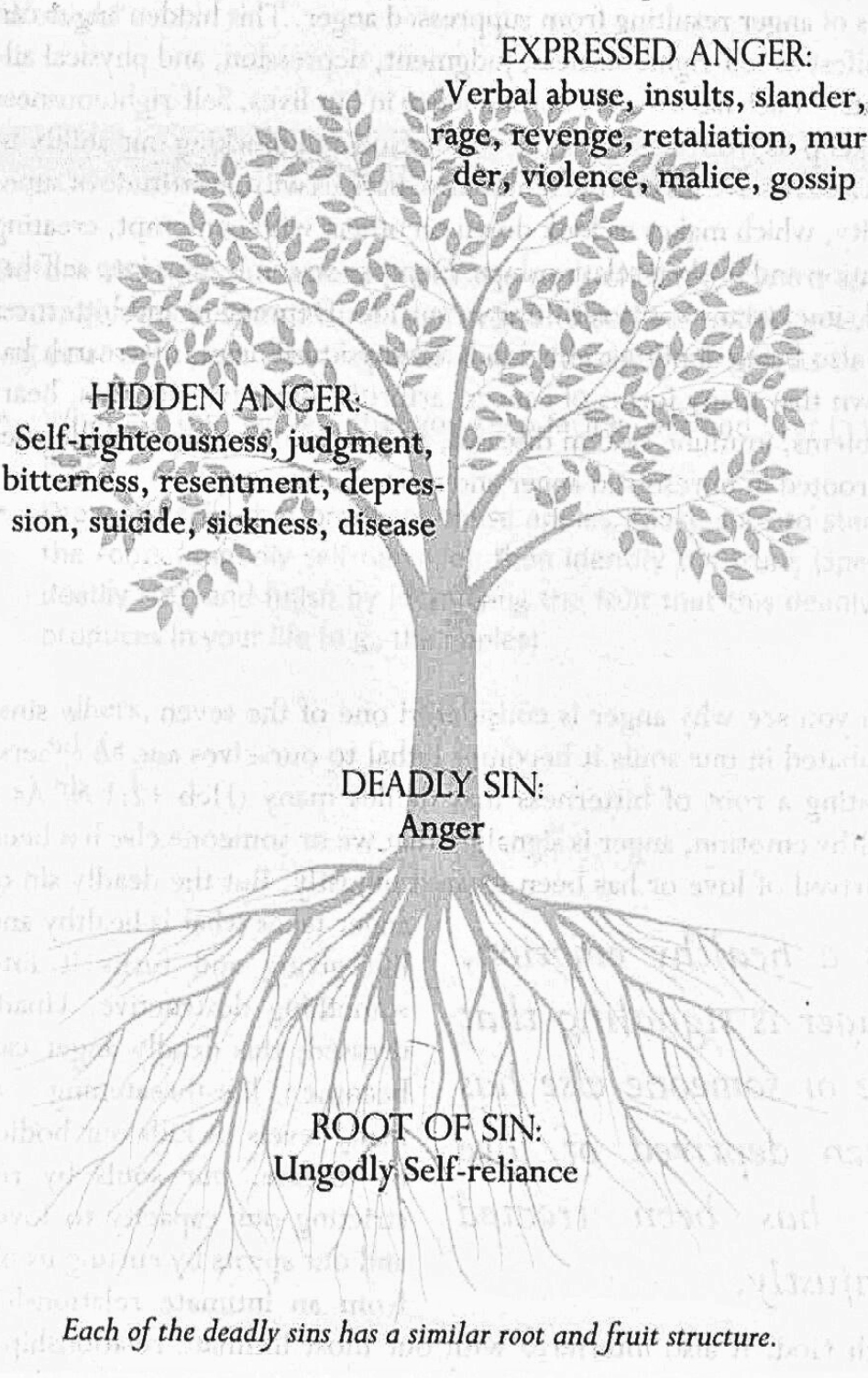
This is what I mean. This tree is what Jesus is getting at. This is a “rotten tree.” In this example, it is the rotten tree of anger. And what is the fruit it is bearing? The fruit are two kinds. First is the expressed anger: so things like verbal assaults, slander, rage, revenge, retaliation, murder, violence, malice, gossip. Ever struggled with one of those? And there is the hidden anger: so things like self-righteousness, judgement, bitterness, resentment, depression, suicide, sickness, disease. Ever struggled with those? Now, this is not an exhaustive list, but I think we can recognize them.
Now think: maybe you struggle with these often, maybe you struggle with them on occasion, maybe you’ve confessed these in confession once or twice. But think: if you confess, and you regularly confess, “Well, I really have a lot of resentment toward this one person”—good job, praise God, way to call yourself out. But what’s going to happen five minutes later? Yeah, you’re probably going to keep resenting that person! And even if you don’t want to resent them, you still fell it. Anyone? Why is this? We believe in Jesus, we pray, we come to Mass—but why do these things seem to never go away? How can someone come to Mass every week, go to confession regularly—but still be a resentful person?
The Trunk: 7 Deadly Sins
Well, stick with the image: what kind of tree produces that fruit? Answer: anger. The “trunk” of that tree is the anger tree. So back up. When it comes to these “trees,” the tradition of the Church and even back into Judaism—the tradition talks about “Seven Deadly Sins,” of the seven capital sins: Pride, Envy, Gluttony, Lust, Anger, Greed, and Sloth. Back in the early years of the Church, a group of people known as the Desert Fathers articulated these Deadly Sins. Through their prayer and study, they discovered certain “diseases of the human heart,” patterns of sin we fall into. And they called them the “Capital” or “Deadly” sins.
The reason we care—you and I—the reason we care is because these are the underlying conditions that support our sins. So again, with “anger.” The sin of anger is not just being angry—being angry is an emotion, emotions aren’t sins. But the deadly sin of anger—that tree has fruit that looks like rage, revenge, resentment, gossip, self-righteousness, bitterness, and on and on. And look, you can do this with anything and everything you struggle with. Start with the fruits, the leaves, the sins, the struggles, and then name it: what is this tree? Is it the tree of anger, or pride, or lust, or what?
Getting to the Root
But then comes the harder part, but the important part. Remember the homily? How do we get rid of sin, the weeds? You have to get to the root. So, what is the root? And the answer to that question is not always readily available. In this example, “Ungodly self-reliance” has led this person to anger. But it could be a lot of things. Next week we’ll dig into that more (pun intended)
But here is one way that I would like you to begin, just to begin to take those first steps. And again, like that little exercise we did last week with forgiveness, this is something you can do during your time in Adoration, or just in your daily prayer. But during your time in prayer, just ask the Holy Spirit to come, to help, to give you insight. But then just ask yourself those questions I have there on your sheet—which are really just three questions: 1) What are the fruits, the leaves? 2) What is the trunk, what kind of tree is this? And 3) what is at the root?
What is the fruit, the leaves? One other way to ask this is, “What are the three biggest attachments or addictions I have?” Some very common things are food, TV, social media, my phone, my self image, sexual content, money, power. What are your three biggest attachments? You could also ask, “What could I talk about for hours? What do I obsess about?” Maybe its politics, or sports, work, the town.
When you have this, it’s usually pretty easy to see which “tree” those are coming from, which deadly sin you are struggling with.
But then—then you can start asking God about the roots. Literally, pray, “Lord, where does this come from?” And some questions to get your mind moving are, “When did this behavior or this obsession or this attachment start? What did it help in that moment, how was it an aid to me? What am I avoiding with this? What am I coping for with this?” But seriously: ask. Ask God. In prayer. Ask and then listen. God will begin to give you memories, maybe a word, a phrase, an image. Listen for how he is speaking to you. Ask him, “What is the root?” And then listen. Because when we begin to see the root, we will know precisely how we are in need of God’s healing, and precisely what to ask God to heal.
 The Beggar