3rd Sunday of Advent (A) – December 14, 2025
St. Joseph – Wichita, KS
Isaiah 35:1-6a, 10; Psalm 146:6-10; James 5:7-10; Matthew 11:2-11
“Look to the East”
There’s this great scene in The Lord of the Rings—if you haven’t watched the movies or read the book that’s your Advent penance, okay? So these next couple of weeks, you have a few weeks to watch three movies. They’re three hours long a piece, so you gotta budget some time for that. Or you can read the books…but let’s be real.
T the reason I encourage you to do this is because the the author of the books, J.R.R Tolkien—who’s a very devout Catholic, and when he wrote The Lord of the Rings trilogy he did it in order to help us to really embrace the Christian worldview. And all these themes in scripture and in our faith that we know, but we don’t really know, and that we can tell you them but we don’t know why they’re important.
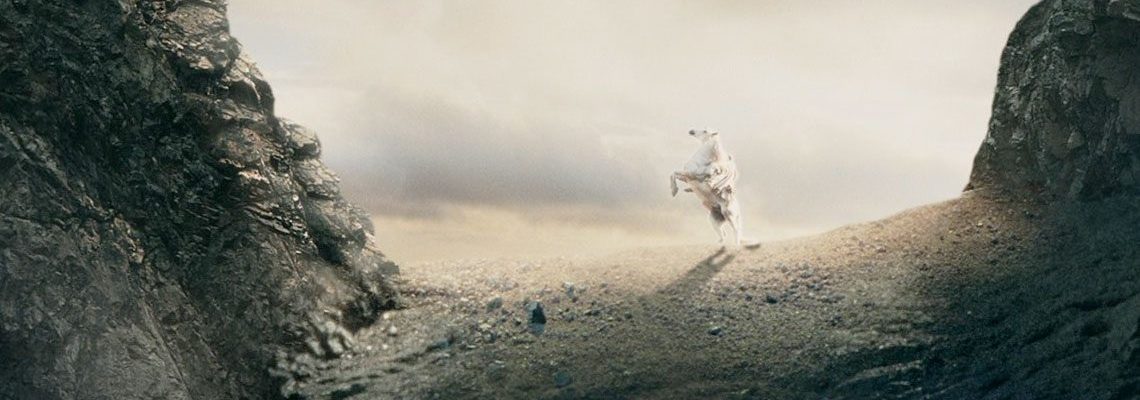
So for example there’s one very famous scene in the second book, second movie where they’re at—it’s called The Battle of Helms Deep (the fort the good guys). The forces of men retreat to this huge mountain fortress and the forces of evil are bearing down on them—and they’re going to lose. The good guys are going to lose: they’re outnumbered, out manned, it’s only a matter of time. They can, they’re gonna hole up there for as long as possible, but they know they’re gonna die defending this fortress. This is their last stand.
But—but there’s one person that has made a promise. So in the midst of this, there’s one person that has promised that they’re going to do something about it, and that’s the character of Gandalf, who (uncoincidentally) is the only person—this is a huge spoiler—the only person in this story that has risen from the dead—okay, that’s not a coincidence. And Gandalf tells them, “Hey, I’ve got to go. So, you’re on your own.” And they’re freaking out, like, “Please don’t leave us!” But Gandalf tells them, “At dawn—okay you’re gonna be fighting this battle all night—but at dawn look to the East and you’ll see my coming.” So that’s what they do. They’re fighting, all night, and they’re losing! But then at dawn they look to the East, at the rising of the sun—and there’s Gandalf bringing a huge army. And boom! They win the battle—erg, sorry, spoiler alert! They win the battle.
So what is Tolkien describing? Well really it’s just the theme of what Advent is. So the whole Christian life, really, but Advent in particular is this season where we’re waiting for the coming of the Lord. Here we are in this world, fighting our daily battles (just like Jesus knew we would). And we know that we’re not going to win. Because even as much as we are successful, as much as we do—well, we know that at the end of it all we’re going to be buried up the street, right? We know we can’t win. We know that death will come for each and every one of us.
And yet, what do we hang our hats on? A simple promise, a simple hope, from one who, un-coincidentally, rose from the dead. One who says, “I will come to rescue you, to save you, to redeem you—even from Death.” This is what Tolkien was trying to help us imagine! That even in the midst of this, we know someone will come—the Risen One will come.
As a side note, this is why we as Christians, traditionally, face the East when we pray. A church should be built with the altar toward the eastern wall, so that the people are facing East. So…big mistake here, ha! But even if it’s not, the direction of the altar is known as the “liturgical east.” This is why if you build a Catholic cemetery right, the the bodies and the tombstones—if the dead person were to sit up in their grave they should be facing East. Even the earliest Christians, in the catacombs of Rome—we find the image of the cross on the eastern wall. Why? Why is this? Because this is the direction of the rising sun, the Hope we await; East is the direction of the rising sun, the dawn. We look to the East because that is the direction of hope, the hope of victory, our only hope in this world. So this is why Advent isn’t just a four week countdown to Christmas. Advent is a time when we once again place ourselves in a very intentional position of “expectant waiting”—waiting for him, the one who will save us, rescue us, redeem us.
The Goel (Redeemer)
So here’s where this comes in to our readings today. We are told to rejoice on this gaudete Sunday, rejoice because our redeemer is close, he comes to save us! Jesus is our redeemer. Here’s the question: do any of you get goosebumps when I say that? “Jesus is our redeemer.” Yeah, me neither. No, I don’t get goosebumps when I hear that! I’ve heard that since I was two. I see it written in Christmas lights on people’s front yard, on Hallmark cards.
To the Hebrew ear, though—to the Biblical ear, this Hebrew word “goel” (גואל)—this word “redeemer,” in Hebrew “goel”—to the Hebrew ear, when they hear “goel” they hear “the oldest son in the family,” your oldest brother or if you don’t have a brother your closest kinsman. The oldest brother takes up the role of goel, of redeemer, under one of two circumstances, two events. These things don’t happen, the oldest son doesn’t have to step into this role of goel. These two circumstances—the first one is that if someone in their family (a younger sibling, the father) is kidnapped; the oldest son has to step into this role as goel and redeem, save, rescue this sibling, this family member that has been kidnapped. The second circumstance is if someone in the family (a little sibling) is murdered; the eldest son has to take up his role as goel, as redeemer, and go and avenge the death of his family member.
So when we hear from the prophets (Jeremiah, Isaiah)—when the people of Israel hear from the prophets, “Thus says the LORD God, ‘I will be your redeemer’”—they get goosebumps. God is saying, “I will become closer to you than blood. I will become the closest relative to you. And I will redeem you, I will rescue you. I will avenge the rule of Death you have been living under for so long. I will fill this role of goel. I will rescue you from this power you’ve been kidnapped by and return you home.” That is this great promise of God coming to “save us” we hear today.
“God himself will be our goel? God himself will redeem us, rescue us?” Yes. Jesus is our redeemer. Goosebumps yet? No! Like we prayed in our Psalm, do you cry out, “Awesome! Yes! Lord, come and save us! Let’s go!” No. Why?
Why do I need rescued?
Because if we’re honest—if we’re honest—we may “know” that we need to be saved, so we can go to heaven and not hell, and so we have to “go to Church” and “go to Confession” and pray a Rosary, and all that—we know that we break God’s commandments, we break the rules, so yeah, we need Jesus to “save us,” forgive us, redeem us—whatever that means.
But if that’s it—if that’s it we’re missing something. And what we’re missing is that our faith isn’t just ideas and rules. Jesus didn’t show up and say, “Yeah, God should have been way more clear in the Old Testament about the actual rules you need to follow. And all these animal sacrifices are a little tedious, so let’s just use bread and wine, and we’re have some celibate guy sit in a room at the church to forgive your sins. Yeah, this will work waaaay better.” No. Not just new teachings and better rules. Our faith is an encounter with an Event, a person, which gives our life a new horizon and a decisive direction (Benedict XVI, Deus Caritas Est 1). Things happen, Jesus is present and active.
That’s what’s going on in our Gospel. John the Baptist is in prison, and so he sends his disciples to Jesus to ask him, “Are you the one who is to come, or should we look for another?” And what does Jesus do? Does Jesus just accept it, and say, “Yes I am! It’s me!” No. Look at what he does. Jesus points to concrete events. Jesus simply says, “Go and tell John what you hear and see: the blind regain their sight, the lame walk, lepers are cleansed, the deaf hear, the dead are raised, and the poor have the good news proclaimed to them.” The disciples of John ask Jesus a question about his identity, and Jesus “identifies” himself as the happening of concrete events.
Our faith—our faith is that Jesus came once, and he will come again ultimately fulfilling everything, but he also comes now, he arrives now—in mysterious and hidden ways, but in real and concrete ways.
Let me share an experience of what this can look like, let me back up this ridiculous claim. Couple summers ago I was helping at Totus Tuus camp. That week we had Seventh and eighth grade girls. And like most middle school girls, they went into that week pretty skeptical. They had never been to something like that before, they didn’t even know where Lyons, Kansas was. And they didn’t have their phone, no TikTok, no Netflix; the bed was uncomfortable, the showers barely work, the food isn’t great. Everything “good” in their life was taken from them.
And at Totus Tuus, if you’re not familiar with it—Camp Totus Tuus is a crazy week filled with a lot of fun, hanging out, learning about the Faith, yeah. But at its core it’s centered around prayer and the Eucharist. And at the end of the week, one of the girls pulled me aside on the last night. She pulls me aside, and she was confused, and upset. And she fumbled for words. But she finally said, “I don’t get it. I don’t understand. I don’t understand this. I’m happy. I’m so happy right now. I’ve never been this happy. This is literally the happiest I have ever been in my life. And I don’t know why.” And she was confused because in the midst of what should have been the worst week of her life—no phone, no bed, hot shower, no good food—something happened. An Event.
Maybe we can see ourselves in that—maybe a little. Maybe we can fill in all of our own “comforts,” our list of things we need, that we think we need to find happiness and fulfillment. Because that’s precisely what we need rescued from. The fancy word is pride—We tell God the one way He can “rescue us” and “redeem us”: “I need a million dollars, abortion to be illegal, WiFi, and an iPhone 25”—and we wait for Him to do that, and we follow the rules in the meantime. But that isn’t living our faith as an event, as a relationship with a person.
No, the Lord wants to do the impossible. What does he say in the Gospel? “The blind regain their sight, the lame walk, lepers are cleansed, the deaf hear, the dead are raised.” Concrete things happen, things change, an Event happens. He is still at work right now.
The Coming of the Lord
Again, go back to Tolkien and the Lord of the Rings, that beautiful scene from the second book. In the midst of the battle of the day, in the struggle of the day, all through the night—hope was sustained by the confidence of the arrival of the dawn. This is also an image of what we are doing here today! Even now, as we gather, we face “East.” At the Mass, the Church has us face this direction on purpose! And facing this direction, we see his coming: here in the Eucharist he becomes present—in mystery, he is present, as we await his final coming.
In our daily battles, in our daily struggles, he comes to us even now! He is alive, he is present, he is active. Just as at this Mass we kneel in prayer and silence and attention waiting for his coming on this altar, I hope and pray that this season of Advent is a truly blessed time to be in prayer and silence and attention, and to watch for the dawn, to anticipate his coming—not just at Christmas—but each and every day of our lives. Because that is when this becomes more than just “going to church.” That is when this, our entire faith, takes on a whole new dimension.
 The Beggar