5th Sunday of Lent (B) – March 17, 2024
St. Paul – Lyons, KS
Jeremiah 31:31-34; Psalm 51:3-4, 12-15; Hebrews 5:7-9; John 12:20-33
GET ALL MATERIALS FOR “RECONNECTING…” INCLUDING HOMILY HANDOUTS, DEEPER DIVE VIDEOS, AND DISCUSSION GUIDES HERE.
So sin isn’t the end of our relationship with God?
Back during our second week of “Reconnecting…” we talked about the challenges to our life of prayer, this relationship with God called prayer. Three of them, specifically: sin, distractions, and our ego. But here’s the thing: I was a little…imprecise. Yes, sin is going to prevent a strong relationship with God. But our weakness, this wounded and broken part of us, this tendency we have to sin, and even the fact that we have sinned—that is actually one of the primary and ordinary places we connect with God. It sounds strange, I know! But it’s true! Now, notice: sin itself? Not going to bring us closer to God, no, no, no. But the fact that we are sinful, that we have problems, that we aren’t perfect—this is actually something that draws God close. Why? Because God, Jesus exists as savior, he offers salvation. Do you know where we get that word, salvation? Salvation has its roots in “salve,” a healing remedy. Our brokenness, our woundedness, our littleness, our poverty—these all attract God’s affection! They don’t repulse him, they draw him close! It’s why God becomes man, it’s why Jesus comes!
This is why one of the most important kinds of prayer—the prayer we want to talk about today, the prayer made in our Psalm today—is the prayer of confession. And not just “going to the sacrament of confession” (although that is part of it). But the prayer of confession. When you fail, how do you process and pray through that experience? How do you work through that in a way that you don’t come out the other side more wounded, feeling crippled, just waiting for it to happen again? What if experiences of confession could leave you stronger than you were before, healed and renewed? At the end of the day, that’s what this prayer of confession is: it’s prayer which leads to an encounter with the living God, a great healing, and a newness of life impossible anywhere else, and ultimately transformation.
Our Rejection of the Problem
The first thing we have to admit from the outset, though, is this: it is part of our cultural upbringing to reject the problem. Everyone thinks that atheism is the great problem of our time, that people don’t come to church because they don’t believe in God, or something like that. But that’s not true! The great problem of our time is not a rejection of God, but a rejection of the doctrine of Original Sin, the idea that we humans have a wound within, that we’re captive in some way, that we need rescued, redeemed, saved. That’s what it is.
The story that cemented this in my brain was the story of Yehiel De-Nur. So in 1961, Adolf Eichmann, one of the masterminds of the Jewish Holocaust—in 1961, Eichmann was captured and put on trial for his crimes at Nuremberg. One of the people that testified at his trial was this man, Yehiel De-Nur. Yehiel was a survivor of the death camps, was literally put on the train to Auschwitz by Eichmann. But during his testimony, face to face with Eichmann, Yehiel started sweating, breathing heavily, and fainted. Very dramatic! Several decades later, Yehiel was being interviewed by Mike Wallace on 60 Minutes. And Wallace asked him “why” he was overcome; was it fear, anger, rage? And Yehiel’s shocking answer was this, “Not hatred. But hatred about human beings. I was afraid of myself.” Face to face with the man that sent him to the death camps, Yehiel was overcome because he realized that this was no demon, no. This man who had sent millions to their death, he was an ordinary human being, exactly like Yehiel. Yehiel told Wallace, “I am capable of doing this. I am exactly like him.” Bingo. Yehiel was dead right, he had put his finger on a deep truth. The truth that within the human heart—within my heart and within your heart—within the human heart is an awful wound, a wound that would allow us to do even something that terrible.
But this is precisely what we as modern humanity deny! We don’t reject God, the vast majority of American believe God exists. All of our parishioners who no longer go to Mass believe God exists. We reject this wound, this something within our heart, what we call Original Sin—that there is something deeply, deeply wounded within me, within my heart, in need of salvation.
We deny that the problem is HERE (*point to heart*)—and if we deny that the problem is a problem of the human heart, within the human heart, then by the process of elimination, the problem must be out there. And so I just need to focus on politics and laws, and community programs, and better schools, and better sports for kids, and social justice. And in that worldview, “faith” and “church” and “religion”—well it just becomes: be a nice person, everyone pretty much goes to heaven, don’t be a jerk. And that is the “religion” of the modern day; I meet people every day (even people that go to church!) that say that.
But what did Yehiel De-Nur discover? The problem isn’t out there; it’s within me. G.K. Chesterton, in response to the question, “What’s wrong with the world?” responded with two words: “I am.” My point is this: we reject confession, the prayer of confession and the sacrament of confession, an encounter with God though confession (why?) because we easily reject that there is something deeply wrong within me. “Yeah, I’m not perfect. I’m impatient with my kids, say some bad words.” No, that’s not what I mean. I mean within us there is a deep wound, one that we continue to contribute to, one that only God can heal. The prayer of confession is how.
The Prayer of Confession
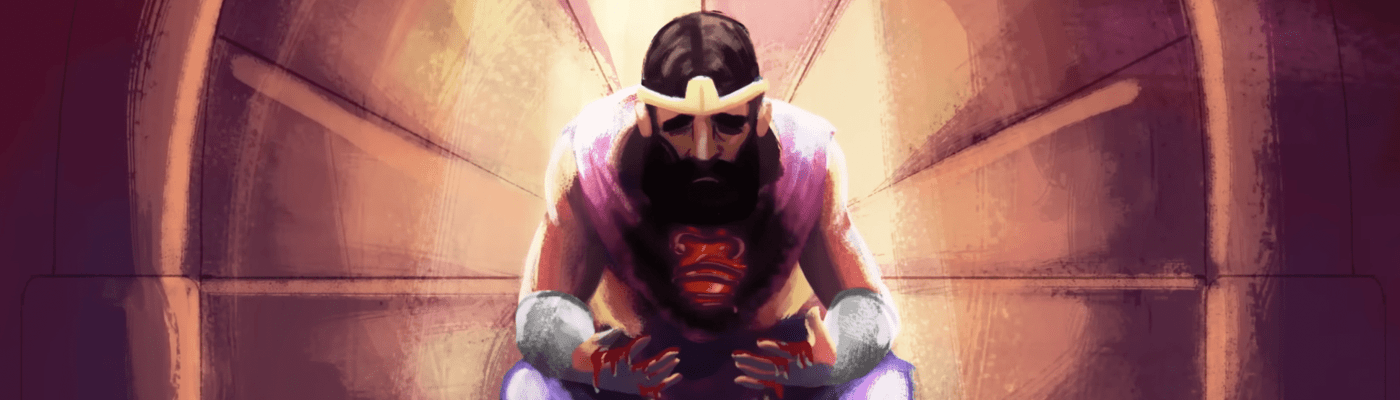
Our readings today, especially our first reading and our Psalm—they make no sense unless we have this truth firmly established. But what’s going on in our readings? Jeremiah has this profound realization (literally an inspiration from God) that the problem isn’t that we don’t know the rules, or we don’t know how to be a “good person,” no. The problem is the human heart itself; we are in need of a changed, a transformed heart. And this is the same insight David had centuries before when he wrote Psalm 51, the most famous of what we call the “Penitential Psalms.” David prays, “A clean heart create for me, O God, and a steadfast spirit renew within me.” What happened to David? What led him to this realization? Anyone know? David was a great king of Israel, man after God’s own heart (1 Sam 13:14)—so that’s pretty great! Why does he need a new heart? Well, one afternoon, David falls into adultery, gets the woman pregnant, and then has her husband killed—all in an attempt to cover it up. And David realizes: not even he, he who is a man after God’s own heart—not even he is free of this deep wound within his heart. If even David is capable of this—it’s Yehiel De-Nur’s recognition—“I am exactly like him.”
But it is through this experience, the experience of this moral failure that David also shows us the pattern of the Prayer of Confession, a method of returning to God so as to experience a healing, a restoration, a renewal of your heart. And there are seven of these Penitential Psalms. Seven. So David knew the need for this kind of prayer. And again, this prayer isn’t the prayer of beating one’s self up, or the prayer of frustration and quitting! Confession—even though it can feel rough—confession is actually an experience that ends in rejoicing and renewal and healing, or at least it should. That’s what David is getting at!
Psalm 51 is the most famous of the Penitential Psalms, but Psalm 32 is the best example. Psalm 32 is a powerful description of the need for the prayer of confession. In the beginning, David prays this: “I kept it [my sin] secret, and my bones wasted away. I groaned all day long…Indeed, my strength was dried up as by the summerʼs heat” (Psalm 32:3-4). So what’s David getting at? Some of you have been there. It’s that experience of some decision you made, something you did (in your past or your present), and you knew it was wrong—but you’re bottling up, holding onto it, made a promise that you’re never going to tell anyone. And it’s eating you alive, ruining you (like food rotting in the back corner of the fridge, food you forgot from months ago).
And so David then prays this: “To you I have acknowledged my sin; my guilt I did not hide. I said, ‘I will confess my transgression to the LORD.’ And you forgave the guilt of my sin” (Psalm 32:5). In that one verse, David uses all three Hebrew words for sin (yeah, in Hebrew there are three words for sin; not going to nerd out on you today, maybe another day). And so it’s an incredibly beautiful poetic way of David acknowledging having done everything wrong! But what does he also show? The path for moving forward; three steps. What does David do first? “I acknowledged my sin,” in other words, David owns it. What do we typically do? We rationalize it, we explain it away, we say that it wasn’t that bad, we say, “Well, I know the Church says it’s a sin, but I think the Church is wrong.” Ok. So no, it’s owning it, naming and claiming it. Second, David says, “My guilt I did not hide.” In other words, he’s making the decision to clean out the refrigerator, to bring it out. And third, “I will confess my transgression to the LORD.” And confess means to tell the truth, to get it out on the table. Acknowledge, stop hiding, and confess.
And what is God’s response? “And you forgave the guilt of my sin.” Not, “And you Lord began to think about a punishment for my sin,” no. “And you forgave.” When we bring all of this forward, God’s response is to forgive; to meet us in our weakness and brokenness, and to forgive. The real question, then, is, “Why wouldn’t we do this?”
Wounded Hearts Transformed
Oftentimes, we just don’t like digging into those parts of our life. They’re messy, they’re not pretty, and some things we just don’t want to have face again. We don’t! For some of us, these are places of deep shame or embarrassment or anger or resentment. And sometimes, these places aren’t even entirely our fault. Sometimes we have habits and patterns of behavior that stem from a place of a deep wound: something our father or our mother did, something another adult did, something a brother or sister or a spouse or even one of our children did. We can carry deep wounds—the most fundamental being Original Sin, yes, but others seemingly just as deep.
Like, I’ll confess it: among other things, I’m a raging workaholic. And my whole life I chalked it up to just being tough, being a hard-worker, a good American. But I regularly confess it now: my lack of trust in God’s care for me, my self-reliance, my ungodly self-reliance; the belief that, “Yeah, God helps us and sustains us…but really it’s all on us.” But on a recent retreat, the Lord—in the most gentle of ways—the Lord revealed to me where this came from. When I was five, I was swimming at our local YMCA. And I jump into the deep end—and I can’t swim, so I just start bobbing up and down in the water, thrashing in the water trying to survive. And even though my brothers are around, no one comes to help. And I eventually make it over to the side. But in that memory—what the Lord revealed to me is that in that moment I made a vow. And the vow was this: “I will never rely on anyone else again. I’ll take care of things myself.” Why? “Because no one cares.” Now, that may sound trivial to you—it sounded pretty trivial to me. But as I continued to pray with that, and as I continued to trace that throughout my life, I began to see that vow pop up all over the place, all throughout my life. Just think about that! A vow made by a five year old child, after a pretty normal experience of getting stuck in a pool—that was the source of a deep wound that affects me even to this day.
I had been stuck with this ungodly self-reliance for years, decades! Confessed it so many times! But do you see? God didn’t reveal my sin to me in order to shame me or to make me feel bad. God revealed the sin so that he could ultimately reveal the wound that drove my sin, the wound within my heart. And then He could begin his work of healing. But I had to be willing to open myself up. St. Jerome said this, he said, “if the sick person is too ashamed to show his wound to the doctor, the medicine cannot heal what it does not know.” By this prayer of confession, a deeper wound was revealed. And through the healing God is working, I can glorify the great mercy of God, his great power to save. Even my wounded heart is a source or glorifying God.
You know, there is a great image of this we use in the liturgy. And that’s the incense. Incense is the blood of the tree. Frankincense and Myrrh, that’s the blood of the tree, the sap of the tree. But where does it come from? The incense we use at Mass or at funerals—Wikipedia says, “by repeatedly wounding the trees” sap is brought forth that can then congeal and harden, and then we have these little pellets we use. So it’s a beautiful symbol of wounds, wounds that have been brought forth and hardened and are useless and dead—which are then placed by the priest on the burning coal (which represents God’s love). And this releases a sweet fragrance that is offered in worship. So notice: even our woundedness, our brokenness, even this can be offered to God. And in fact, this is what God delights in! God delights in healing, in this great transformation of our hearts!
Here’s the point: the prayer of confession isn’t meant to make us feel bad for what we’ve done, to beat ourselves up, to live in our shame, no. If that’s what’s happening, you’re doing it wrong. The prayer of confession—and going to Confession—this is a powerful means of entering more deeply into our relationship with God. Confession opens us up to the powerful ways in which God can transform the deepest parts of our life.
 The Beggar